MLS Photography luminis.media Showcases Houston Architectural Gems
Real estate photography in Houston lives at the intersection of sun, steel, and swamp air. From glass towers downtown to shaded Craftsman porches in the Heights, the city rewards a photographer who reads light and respects lines. MLS photography is the storefront of every listing, and in a market as competitive as Houston, it needs to be careful, fast, and honest. That is where Luminis Media’s approach earns its keep. The work looks polished, but it is grounded in the small, repeatable choices that make a listing scroll-stopping on day one.
What MLS photography has to accomplish in Houston
Most agents ask for more views, more showings, and fewer days on market. Photography is not a silver bullet, but it is often the first lever to pull. The Houston Association of Realtors platform sets some practical boundaries that shape how we shoot. Horizontal compositions dominate because MLS thumbnails and gallery views display them best. Branding, watermarks, and people in-frame are typically restricted. Heavy sky replacements and removed power lines might look good on Instagram, but they can cross the line into misrepresentation. We keep edits honest: accurate paint colors, true room proportions, and real exterior conditions, because surprises at a showing erode trust.
For Luminis Media MLS photography, that restraint is paired with the tools that lift a scene without distorting it. We blend exposures to balance window detail, correct mixed lighting so cabinets do not shift from maple to magenta, and keep verticals straight so high ceilings do not look like funhouse mirrors. The result fits MLS standards and still carries emotional weight.
Reading Houston light, and working with the weather you actually get
Houston is narrow shadows at noon and endless blue during summer. It is also foggy mornings in March and thunderheads that crack open right before a twilight shoot. MLS photography Luminis Media teams learn to love plan B. Midday exteriors get scheduled with a strategy: we pick elevations that benefit from side light rather than full frontal glare, and we save the front elevation for late afternoon when texture and shadow return. On high humidity days, lenses fog the moment the camera bag opens. We acclimate gear by cracking the case on arrival so glass warms to ambient air before the first click, and we carry multiple microfiber cloths to stay ahead of condensation.
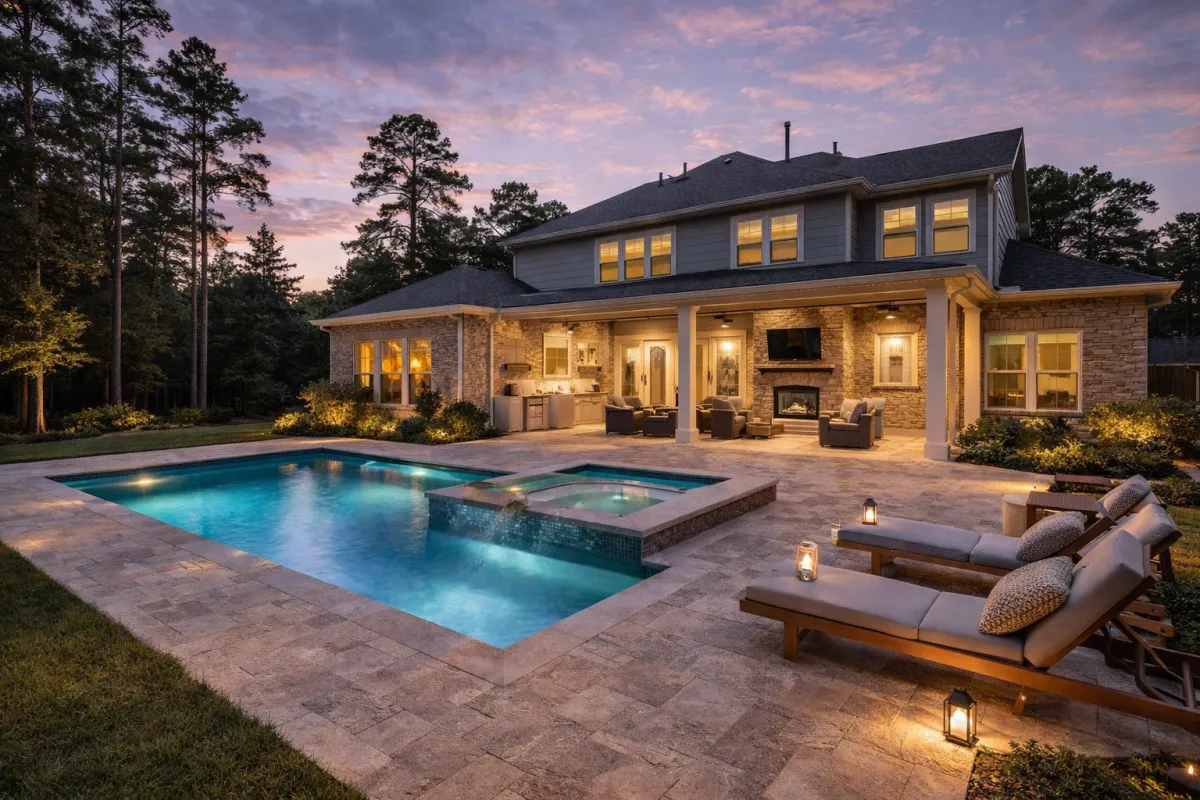
Twilight is Houston’s secret sauce. Those 20 minutes after sunset compress the dynamic range so interior and exterior live in the same exposure. Pools glow, uplights pull out brick texture, and glass towers stop reflecting the sky like mirrors. It is not a magic fix. If the windows are dirty, the camera will tell the truth. But with timing and a simple lighting plan, a modest home takes on a cinematic calm that photographs beautifully on MLS without overproduction.
Keeping lines honest: lenses, tilt, and restraint
Architecture punishes sloppy geometry. A wide lens exaggerates space, which is useful, but it also bends proportion if you push too far. Our standard interior range sits between 17 and 24 mm on full frame. In tight powder rooms, we would rather step back to the doorway and accept a partial vanity than force a 12 mm view that turns a five-foot wall into a bowling lane. Verticals stay vertical. Whenever possible, we use tilt-shift lenses for exteriors and large interiors. The fix in post is fine for small corrections, but large perspective shifts drag resolution to the corners and soften detail. On premium properties, that discipline is non negotiable.
Mixed lighting is a Houston constant. Daylight at 5600K pushes through a sliding door while the kitchen glows at 3000K from pendants with a warm tint. If you do not manage this, white cabinets can take on a green cast. We shoot a blend, balancing ambient with bounced flash at 1/4 or 1/8 power to lift shadows and neutralize color without flattening a space. In post, a simple HSL cleanup removes the remaining cyan from windows and yellow from tungsten. The goal is to match how the human eye would experience the room, not to sterilize it.
A quick checklist agents can send sellers before we arrive
- Clear countertops to three or fewer items per surface, and remove fridge magnets.
- Stash cords, pet bowls, litter boxes, and personal photos.
- Replace any burned bulbs and match color temperature where possible.
- Open blinds, clean windows, and plan for all lights on.
- Park cars away from the driveway and curb in front of the home.
Small prep steps save major retouching later. They also speed the session, which matters when tenants, kids, or contractors are in the mix.
Neighborhoods shape the shoot
Houston is not one look, so a single recipe fails fast. The Heights asks for porches and details. We get low on the sidewalk to catch the depth of a double gable or the line of a Victorian spindle. Interiors often have transom windows and long, narrow living areas. A three frame sequence captures the flow: front room to dining pocket to kitchen, listing photography with care to keep those century-old floors straight in the frame. Montrose leans eclectic, with bungalows tucked behind mature trees. Shade forces slower shutter speeds, so we bring a monopod for flexibility and control reflections on glossy front doors with a circular polarizer.
River Oaks wants scale, but not distortion. For these estates, the front elevation earns time. If we have a symmetrical facade, we shoot from the centerline and two modest angles to model depth. The landscaping matters as much as masonry. A slightly higher vantage point, sometimes from a vehicle roof or a 20 foot painter’s pole, flattens foreground grass and shows the sweep of the front walk. When luminis.media aerial real estate photography is permitted by airspace and client preference, a low altitude drone shot, legal within the 400 foot ceiling and well below that, can reveal lot context and privacy hedges without turning the home into a toy.
Downtown and Midtown complicate things with glass, security, and schedules. Lobby access, elevator permissions, and loading dock rules can eat an hour if no one coordinated in advance. We confirm with building management the day before, double check parking, and carry a small rolling kit for tight elevators. For glass towers, reflections show every softbox and tripod. We use off camera flash angled away from the glass and, when needed, a black cloth to mask reflections at the edge of frame.
The honest MLS edit
Editing for MLS is a restraint exercise. A sky swap that adds cumulus drama to a winter haze reads as marketing, not architecture. Luminis Media listing photography is built on alignment, color integrity, and balanced light. We remove small scuffs on floors but do not add crown molding that is not there. For window pulls, we bracket exposures and blend manually so the view through the glass is legible, but not pasted in. Color balance sits in a tight range so walls look like their paint chips from Sherwin-Williams, not a social media filter. If a room is painted a bold hue, we resist the urge to neutralize. Buyers should see it as is.
Sequencing the story: how we build a gallery that makes sense
A gallery that starts with four random rooms makes buyers bounce. We think in movement. The first image is almost always the front elevation in its best light. Then we step inside and show the main living space as a wide view, followed by kitchen anchors from two angles. Dining, owner’s suite, and premium baths follow. Secondary bedrooms, office nooks, and utility spaces get tidy, consistent compositions that are clear without overselling. Outdoor living, garage storage, and community amenities round out the set. For townhomes where vertical living can confuse, we include a single photo per floor of the stair transitions, so buyers can imagine the path through the home. This sequence has one job: eliminate friction between interest and showing.
When aerials elevate the story, and how to fly them the right way
Luminis Media aerial real estate photography is a tool, not a default. For acreage in Cypress or waterfront in Clear Lake, it is essential. For a Montrose bungalow hemmed in by trees and power lines, it can be more distraction than value. Drone real estate photography luminis.media crews fly under FAA Part 107, maintain visual line of sight, and respect the 400 foot AGL ceiling. Houston’s airspace is a patchwork of controlled zones tied to Hobby, Bush Intercontinental, and Ellington. LAANC authorizations are commonly available, but not everywhere and not at all altitudes. In many parts of central and southeast Houston, smart flight plans keep us well below tree top when near heliports and hospitals, and sometimes we do not fly at all.
There is a simple test for whether a drone shot belongs in an MLS set. If it reveals valuable context a buyer cannot see from the ground, include it. That could be a cul-de-sac position, a greenbelt directly behind the fence, or line-of-sight to a community pool. If the aerial just repeats the front elevation from 60 feet up, we skip it. And if airspace, weather, or safety say no, a 20 foot pole or second story window vantage can often provide the needed perspective without propellers.
Luminis Media drone real estate photography is not just about the hero shot. We use elevated obliques at modest heights to show roof condition and drainage, helpful for older homes in the Heights or garden homes in Sugar Land with complex rooflines. On the Gulf side, wind picks up late, so morning flights reduce risk. After rain, we wait for the ground to drain or we risk showing muddy ruts in acreage tracts that distract buyers. Houston’s humidity means batteries run warmer, so we carry spares and keep them shaded between flights.
Video that fits MLS rules and still feels like cinema
Luminis.media real estate videography has to satisfy two masters: the MLS link that prefers unbranded, and the agent’s marketing that deserves a branded cut. We deliver both versions. The unbranded plays well within MLS rules, no logos or agent cameos, while the branded cut runs on social, with name and number at the end slate. The technique shifts by property. A 1,200 square foot condo downtown needs tight camera control and quick pacing, no one wants a minute on a hallway. A five acre horse property near Tomball benefits from a blend of ground gimbal moves and low drone flyovers that take their time.
We favor honest camera movement. Slow dolly ins into a kitchen island. A lateral slide that reveals a suite. A tilt up that introduces a two story foyer light fixture. For interiors with shiny floors, we are gentle with gimbal steps to avoid micro jitters and remove our reflections wherever possible. Color grade stays neutral, consistent with the stills so a buyer clicking between media does not feel like they are seeing two different homes. Audio is often ambient only, sometimes a faint track to pace the edit. Voiceover can work for new construction where builder features matter, but it must be tight and informative, not salesy.
A field note on working Houston humidity and heat
If you have not had a lens fog mid shoot in August, you will. We arrive early and keep the camera bag cracked in the shade, letting gear acclimate. For exteriors, a circular polarizer helps cut glare from wet pavement or pool surfaces after an afternoon storm, but we watch out for patchy darkening of blue skies at wide angles. On interiors, ceiling fans create banding in LED lights on video. We turn them off during filming and back on afterward. We carry shoe covers for construction and model homes to keep floors pristine. And we bring towels, not just for us, but to protect gear placed on damp concrete. Details like this do not make the photo better, but they keep the day steady.
Working sequence on site
Every property has quirks, but an efficient shoot follows a rhythm. We start with a walkthrough with the agent or homeowner, noting rooms with special requests, lights that are out, and access constraints. We stage lightly, tucking cords, aligning chairs, and straightening bed skirts. We shoot the main floor first while the sun is still high enough to bounce light around, then pivot outdoors for shaded sides and backyard coverage. If a twilight is scheduled, we capture interiors during the last bright hour, break for a brief reset, then return for the front elevation, pool, and exterior details when the house glows. If the listing includes Luminis Media aerial real estate photography, we check wind, update LAANC status, and stage batteries so the flight happens before or after the busiest ground moments.
For multi unit buildings, timing matters. Elevators and hallways empty out over lunch and late afternoon. We coordinate with managers to access rooftop decks and amenities, and we carry a compact light kit for windowless gyms that tend to photograph like basements. We avoid photographing people for MLS compliance, and we protect privacy by timing amenity shots during slow periods.
Communicating with sellers and tenants
A calm shoot often starts with a kind email. Tenants appreciate clarity about duration and what we will move. We promise to return items, and we do. If pets stay on site, we plan a rotation so we do not prop doors open while a dog makes a break for the neighbor’s hibiscus. When a seller is anxious, we walk them through the sequence and point to a few areas where their help will make a difference, like clearing a fridge front or pulling a car out of the driveway for ten minutes. Real estate moves on relationships. Luminis Media listing photography crews understand that the best marketing result lands when the day on site is respectful and efficient.
Managing expectations when the home is not ready
Sometimes we are asked to make a construction zone look finished. That is not our job. We photograph current reality helpfully. If a builder is still installing backsplash tile, we compose to show progress without pretending the kitchen is market ready. For occupied listings with heavy furniture, we pick angles that keep focus on architecture instead of clutter. Where possible, we recommend a short reshoot after minor fixes rather than over editing a flawed base.
Delivery standards and turnaround that helps agents win
Speed matters in Houston. A listing that misses a hot weekend loses momentum. Our standard delivery for luminis.media MLS photography is next business day for stills, with same day rush available when schedules allow. Aerial and video add time, usually 24 to 72 hours depending on complexity. We export galleries sized for MLS and a larger set for print and social, including vertical crops for stories and reels when the property benefits from social distribution. Filenames are clean and descriptive, which helps when teams manage dozens of listings a quarter.
We also real estate photography pricing include a concise floor plan when requested, generated from lidar or measured on site. It is not a substitute for a survey, and we label it accordingly. But for buyers browsing MLS, a simple plan clarifies flow and scale better than any single image.
When a photo should not make the gallery
It is tempting to include every room to prove thoroughness. That is not smart MLS strategy. Windowless utility closets with brittle fluorescence do not help. A cramped third guest room that barely fits a twin bed might be better described in text than shown as an unflattering image. We decide with the agent where the line lives, keeping the gallery lean and strong. The number of photos is less important than the pressure they put on a buyer to book a showing.
The small, technical choices that separate good from forgettable
- We meter for exterior highlight retention, then lift shadows in a controlled blend to avoid halos.
- We shoot exteriors again after interiors, when the sun may have moved into a friendlier angle.
- We keep a consistent camera height, usually around 48 inches indoors, higher for kitchens to show counter depth.
- We correct barrel distortion at lens profile stage to keep cabinetry honest.
- We export sRGB, which plays best across MLS and common devices.
Each of these is minor, but together they create a dependable aesthetic that agents learn to trust. This is the backbone of listing photography Luminis Media offers in Houston’s complex market.
A short case story from the field
A modern farmhouse outside the Loop came to us after three weeks on the market with low traffic. The photos were clean but cold. The front elevation had been shot at noon, so the standing seam roof threw glare and the cedar beams went flat. Inside, the photographer leaned hard on a 14 mm lens, making the living room look expansive but the fireplace toy small. We rescheduled for late afternoon. The front elevation gained shadow that sculpted the porch. We moved to a 20 mm interior and lit with soft bounce to pull true tone out of the white oak floors. We shot a short unbranded video for MLS and a branded cut for the agent’s social. Traffic improved the next weekend. No miracle, just honest light and tighter choices that respected the architecture.
Why Houston deserves disciplined aerials
Houston’s relationship with water is complicated. Buffalo Bayou, bayous in the west, and the Ship Channel near the east all make for spectacular aerial context, but they also sit inside complex airspace and environmental conditions. After heavy rain, a drone shot of a creek at flood stage can raise questions. We time flights when context helps and shows stability. Near Ellington, airspace ceilings can be very low. We plan ahead, secure LAANC when available, and carry a telescoping pole option so we are never stuck without an elevated perspective. Drone real estate photography Luminis Media is about judgment as much as flight skill.
Pricing conversations and value framing
Agents ask about ROI. The safe answer is that better visual assets rarely hurt. A more useful answer is that the right package for the right property matters. A $250,000 starter home needs fast, accurate MLS stills and a tidy exterior set. A $2 million custom build needs a patient twilight, strategic aerials, and a soft touch video. We advise clients to spend where buyers will feel it. For many homes, luminis.media listing photography alone wins. For others, adding luminis.media real estate videography and a few carefully chosen drone frames amplifies reach in a way stills cannot.
What Luminis Media brings to the table, day after day
Luminis Media MLS photography is less about a single glossy hero image and more about a dependable system: trained shooters who understand Houston neighborhoods, editors who keep color honest, and producers who navigate schedules, HOA rules, and airspace without drama. The work covers the spectrum, from intimate bungalows to high rise penthouses, from quick turns to elaborate twilight productions. We do aerial when it serves the story, as Luminis Media drone real estate photography or as a simple elevated pole alternative. We do video when movement clarifies space or adds emotion. And we package it all so an agent can press publish with confidence, knowing the visuals will carry their weight on MLS, social, and print.
Houston keeps changing, growing outward and upward. The architecture deserves photography that understands that. MLS photography luminis.media treats each listing as a specific place with its own light and constraints, not a content slot to fill. That stance, steady and practical, is how we showcase the city’s architectural gems and help our clients win the small battles that happen, click by click, on every screen.